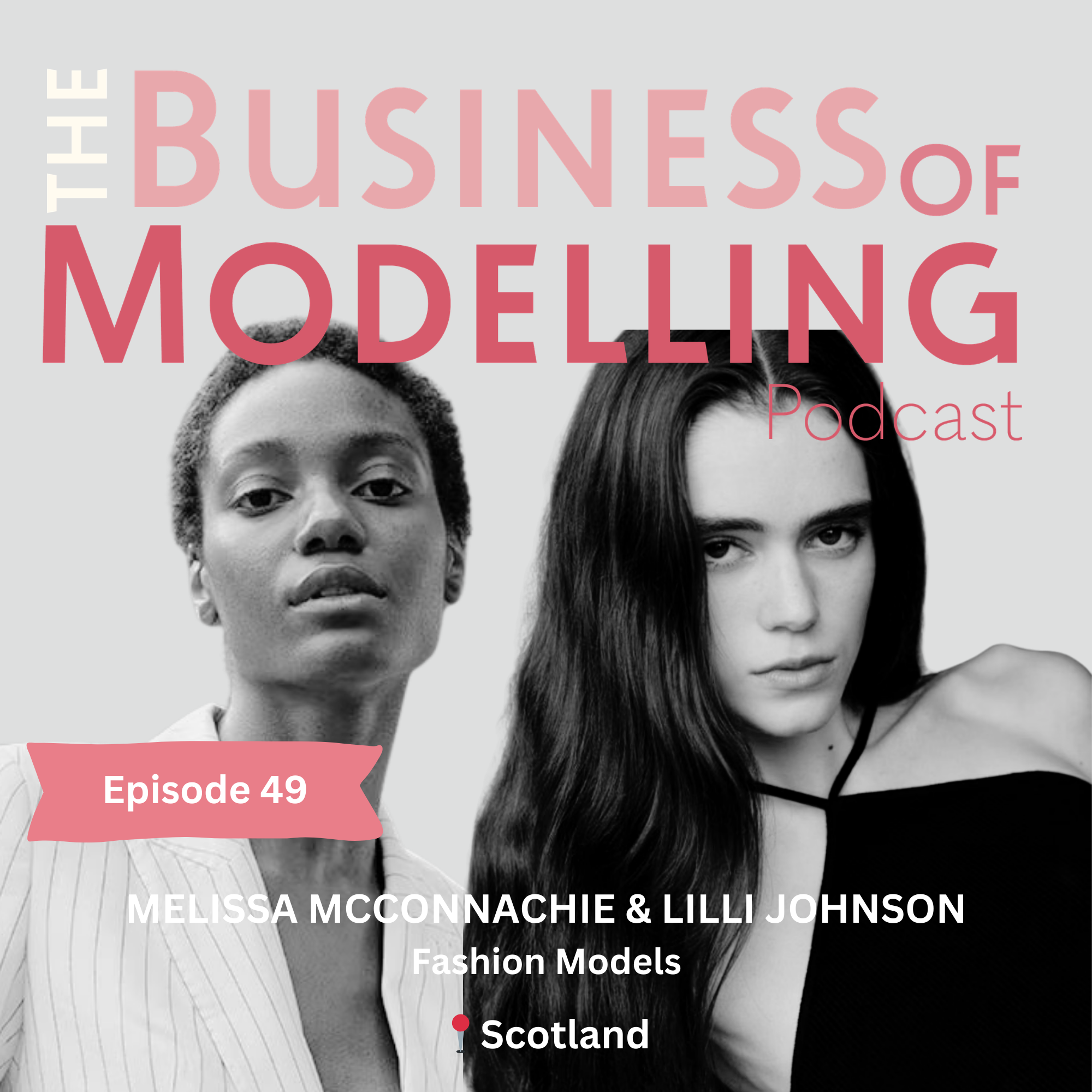
Episode 49
This week, Tessa is joined by fashion models Lili Johnson and Melissa McConnachie, both represented by Colours Model Agency in Glasgow, for a conversation about how they found their way into the fashion industry and what it takes to build a career as a working model.
In this episode, they talk about being scouted in Scotland and the early stages of their careers, including their first shoots, the nerves that come with stepping in front of the camera and how they gradually developed confidence in the job. As their careers progressed, they began working across editorials, e-commerce campaigns and Fashion Week, collaborating with brands and designers including Zara, Simone Rocha, JW Anderson, Ted Baker, Selfridges and Burberry.
Lili and Melissa also reflect on the realities of modelling that people rarely see, including rejection, the fast pace of show seasons and the discipline required to keep going in a competitive industry. They speak about the importance of having a supportive mother agency, the friendships that form between models, and the perspective they’ve gained as their careers have developed.
Lili Johnson and Melissa McConnachie on Fashion Modelling, Rejection and Building Confidence
Interview by Tessa Dewing for The Business of Modelling Podcast
Lili Johnson and Melissa McConnachie are fashion models represented by Colours Model Agency in Scotland. Both were scouted at a young age and have since built careers across editorial shoots, e-commerce campaigns and fashion weeks, working with brands and designers including Zara, Simone Rocha, JW Anderson, Ted Baker, Selfridges and Burberry. They speak about how they first entered the industry, what the early stages of modelling really involve and how confidence develops over time.
Being Scouted
Neither of Lili or Melissa originally set out to become models. For both, modelling arrived unexpectedly.
Melissa explains that she was discovered while out with friends in Glasgow as a teenager. She remembers walking back to the train station when Mark from Colours Model Agency approached her. “I was about sixteen or seventeen and walking back to the train station with my friends when Mark from Colours saw me and stopped me,” she recalls. “It’s funny because I had a full face of makeup on and didn’t look like a model at all. But he saw through that.”
For Lili, she had already begun studying psychology at university in Edinburgh when a friend who was signed to Colours suggested she meet the agency. “I was living in halls and needed money, so I thought, why not give it a go,” she says. “I emailed Mark, went in the following week, did some digitals and they signed me.”
Learning the Job
Entering the industry meant quickly adjusting to an entirely new environment. Early modelling work often involves test shoots, learning how sets operate and becoming comfortable in front of a camera.
Melissa admits those first shoots felt daunting. Standing in front of a full creative team was something she had never experienced before, and confidence did not come immediately. “At that point I was quite a nervous person,” she explains. “My first shoot, I was so nervous I could barely look at anyone. People think modelling is easy, but standing in front of a camera with everyone watching takes confidence.”
For Lili, the experience was similar. She remembers her first job feeling slightly surreal as she adjusted to the reality of being on set. “I didn’t really have the confidence and had a bit of imposter syndrome,” she says. “It felt like an out-of-body experience.”
Over time, that confidence grows. Models begin to understand how photographers, stylists and creative teams work together, how to interpret direction and how to move naturally in front of the camera.
Fashion Shows and the Pace of Fashion Week
As their careers progressed, both models began working across different types of modelling including editorial shoots, e-commerce campaigns and fashion shows. Each environment brings its own pace and expectations.
For Lili, moving to London and working during fashion week was a turning point where modelling began to feel like a serious career. “It started to feel like a career once I moved to London,” she explains. “The first thing I did was Fashion Week and that’s when it really clicked.”
Fashion week seasons bring excitement but also pressure. Behind the finished runway images seen by the public is a fast-moving schedule of castings, fittings and shows where models often must adapt quickly as plans change.
Handling Rejection
One of the realities both models speak about openly is rejection. In modelling it is constant and unavoidable.
Lili explains that learning to separate rejection from personal confidence is one of the most important lessons a model learns early on. “One of the first things my agent told me was that this job is ninety-nine percent rejection,” she says. “You might only book about ten percent of the jobs you’re put forward for, and that’s normal.”
Melissa agrees that this perspective becomes easier with experience. “When you want something really badly it’s hard to hear no,” she says. “But you learn it’s not personal. They might just want someone with different hair or a slightly different look.”
Understanding this helps models develop resilience and maintain perspective as their careers progress.
The Role of a Mother Agency
Both models also emphasise the importance of having a strong relationship with their mother agency. For them, Colours Model Agency has provided guidance and reassurance throughout their careers. Lili describes the relationship as supportive beyond just booking work. “They really care about you,” she says. “They book jobs of course, but you can also just go in and talk to them. They’re like second mums.”
That support has helped them navigate the industry while maintaining a long-term view of their careers.
Perspective Over Time
As their experience in the industry has grown, both models say they now have a clearer understanding of how the fashion world operates and what it takes to build a career.
For Melissa, modelling has also helped her develop confidence in herself. Growing up, she remembers often feeling self-conscious about being tall, something that modelling ultimately helped her embrace. “I struggled a lot growing up being the tall girl,” she says. “Modelling really helped my confidence. I would never have been able to do something like this when I was younger.”
Their conversation offers an honest perspective on what working in fashion modelling involves beyond the finished photographs. Confidence develops gradually; resilience becomes essential and strong support from an agency can make a significant difference.