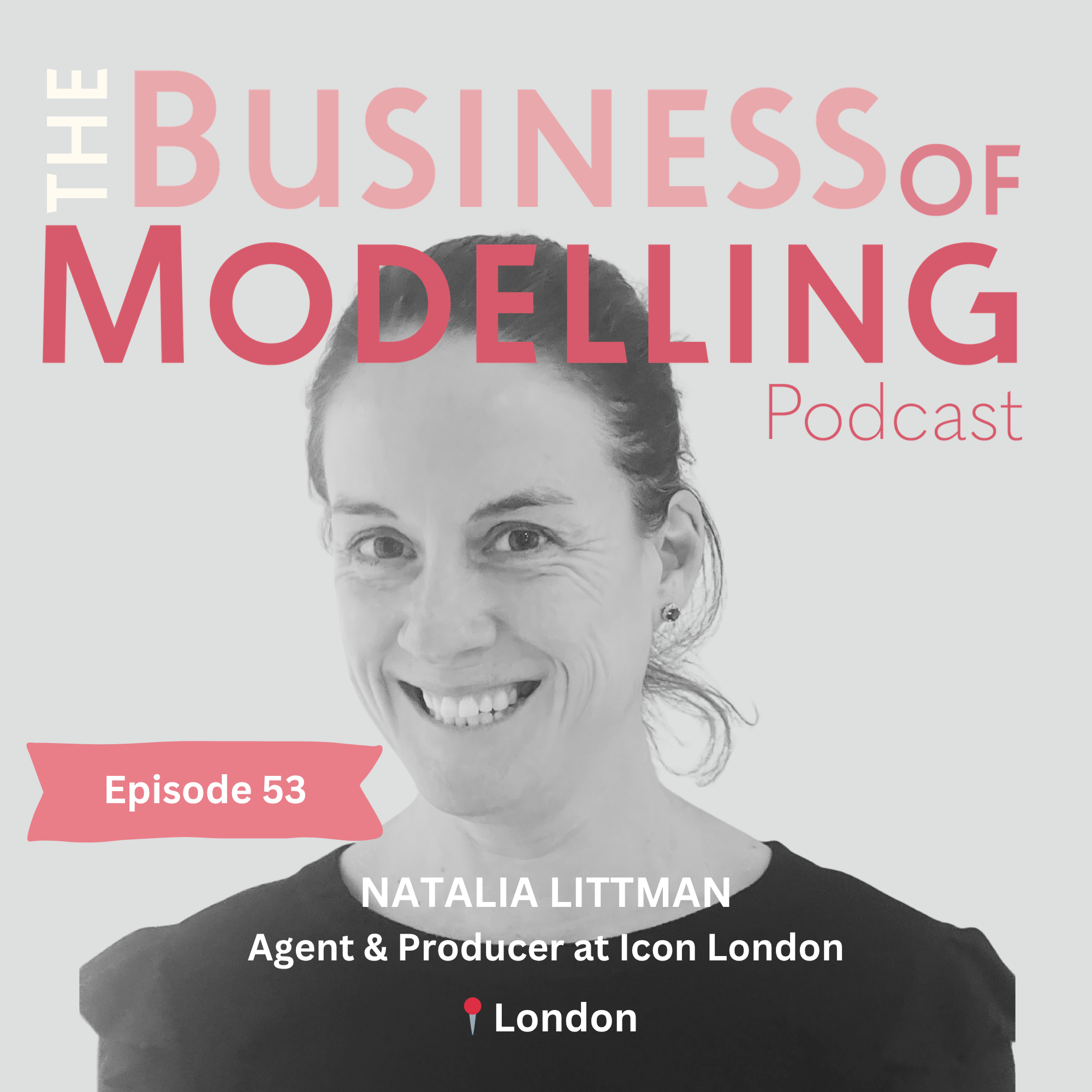
Episode 53
This week, Natalia Littman, agent and producer at Icon London, talks about how creative careers are built behind the scenes, and how much of that process is driven by relationships, consistency and getting the right work in front of the right people. She shares insight into how photographers and creatives are positioned, and why clarity in both portfolios and communication is key to getting noticed.
She also discusses the realities of production, from managing budgets and expectations to balancing what a client wants with what is achievable on set. With increasing pressure on time and cost, she explains how understanding both representation and production allows for better decision-making and smoother delivery.
Natalia reflects on how the industry has become more competitive, particularly with the rise of social media, and why editing your work and presenting it clearly is more important than ever. She also highlights what makes talent stand out on set, from being prepared and understanding the brief to simply being easy to work with in a high-pressure environment.
Natalia Littman on Representing Photographers and Producing Fashion Shoots
Interview by Tessa Dewing for The Business of Modelling Podcast
Natalia Littman is an agent and producer at Icon London, working across photography, production and creative representation. With a career built across agencies in the UK and US, and then starting her own agency, she offers a view of how creative work is developed and managed behind the scenes.
In this episode, she speaks about the realities of building careers in the industry, from shaping portfolios and managing talent to working closely with clients on production. She explores how the role of the agent extends far beyond introductions, and how relationships, consistency and communication sit at the centre of long-term success.
Starting Out and Finding the Industry
Natalia reflects on how she found her way into the industry through advertising and production, eventually moving into creative representation. “I fell into the agency…and I fell into this industry,” she says, describing how her early roles gave her exposure to both the creative and commercial sides of the business.
That experience shaped her understanding of how work is secured. “It really is and was a numbers game,” she explains, referring to the process of getting photographers in front of the right people and building their visibility over time.
Building Something of Her Own
After years working within agencies, Natalia made the decision to start her own business, focusing on a more considered and personal approach. “I wanted it to be small. I wanted to go back to basics,” she explains.
She also reinforces that success is shared. “If you’re not working, I’m not working…it’s a team effort,” she explains, reflecting the level of involvement required on both sides.
Production and the Reality of Delivery
Alongside representation, Natalia has always worked in production, something she sees as essential to doing the job properly. “Being a producer for your photographer means that you know how they shoot,” she explains.
That understanding allows her to manage projects more effectively, from budgets through to execution. “Understanding both sides helps with budgets… you can pre-empt what they’ll need on set,” she says.
It also changes how work is delivered. “It makes the whole process more efficient… you can just speak to one person and get everything you need,” she adds, highlighting the value of joined-up thinking across production and representation.
Portfolios and Positioning
A key part of Natalia’s role is helping creatives present their work in the right way. She is clear that less is often more. “Trying to show too much is one of the biggest mistakes… I need to understand your work within the first few images,” she explains.
Beyond the images themselves, she looks for clarity and thought behind the work. “If your eyes don’t light up when you talk about your work… it’s a dull conversation,” she says, pointing to the importance of being able to communicate ideas as well as visuals.
On Set Expectations
Natalia also speaks about what makes shoots run well, particularly from the perspective of working with models and talent. Preparation is key. “If a model agent has read my brief, and passed the details onto the model properly, happy days,” she says, emphasising how much smoother things are when everyone is aligned from the start.
She also highlights the importance of attitude on set. “I just love working with nice models who don’t complain… we’ll have a giggle,” she explains, reinforcing how much behaviour impacts the overall working environment.
The Reality of the Industry
Throughout the conversation, Natalia is honest about the challenges of the industry, from difficult personalities to changing expectations. “You’ve got to have a really thick skin,” she says, reflecting on how feedback and rejection are part of the process.
At the same time, she brings it back to something simple. “We’re creating something together… it should feel like a good environment,” she explains, underlining the importance of respect and collaboration across every level.
Overall, Natalia offers a clear and practical perspective on how the industry operates behind the scenes, and what it takes to build, manage and sustain a creative career in a competitive environment.